
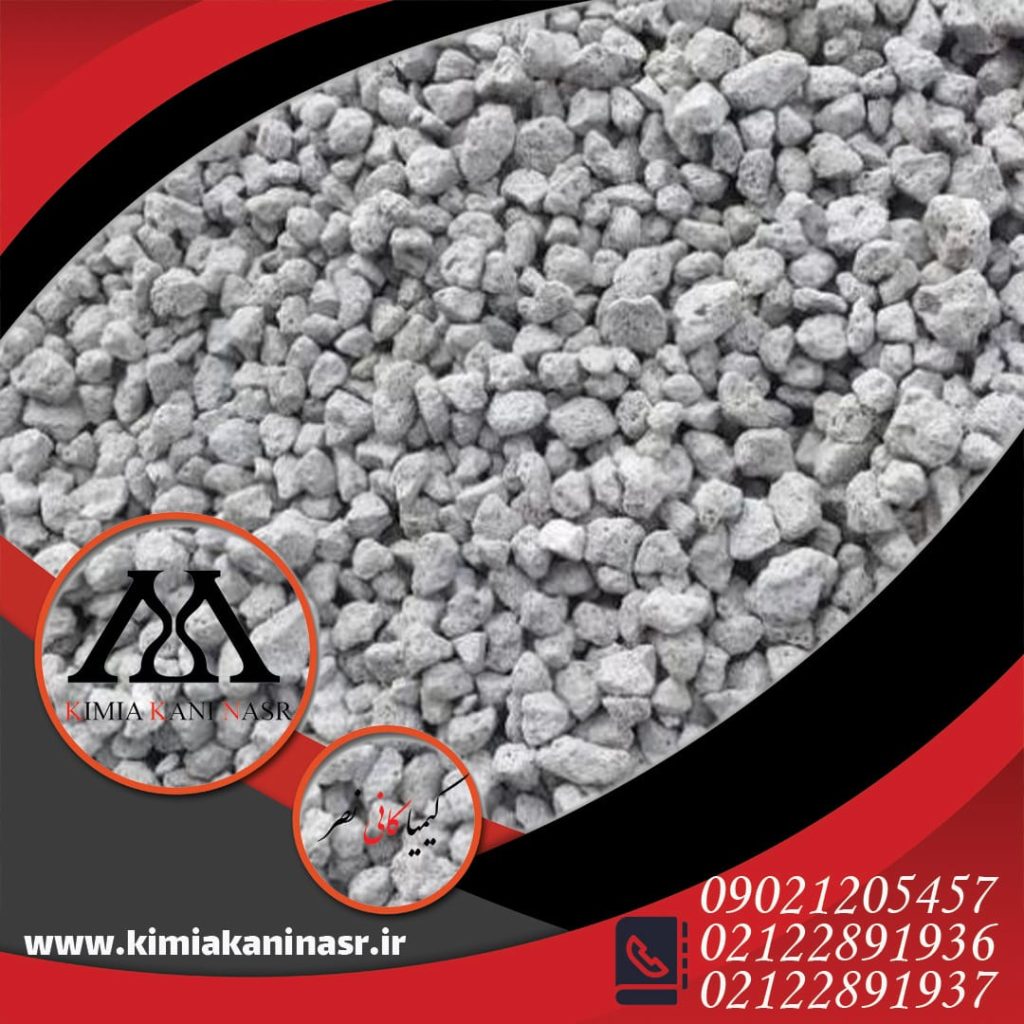
Specific Weight (Density): Pumice has a low specific weight due to its lightweight structure, typically ranging from 500 to 700 kilograms per cubic meter.
Compressive Strength: Pumice has a higher compressive strength compared to other lightweight fillers, allowing it to effectively bear loads from floors and buildings.
Thermal Insulation: Due to the air pores in its structure, pumice is an excellent thermal insulator and can significantly reduce heat transfer.
Sound Insulation: Pumice is also a good sound insulator due to its unique physical structure and is effective in reducing noise transmitted through building floors.
Moisture Resistance: One of the beneficial characteristics of pumice is that it does not easily absorb water, making it resistant to moisture.
Fire Resistance: Pumice exhibits high resistance to fire and is known as a fireproof material.
Introduction to Pumice in Terms of Granulation:
Almond Pumice: This is the coarsest type of pumice, typically used for initial sub-bases (about 10 centimeters). This type of pumice is utilized for flooring that requires a larger volume.
Pea Pumice: This type is of medium size and is used for intermediate surfaces or in areas where less filling is needed. The ratio of use for this type of pumice can vary depending on the surface type and required thickness.
Fine Pumice (Filler): Due to its fine texture, this type of pumice is employed for final surfaces where a smoother finish is needed. It is commonly used for final leveling or in areas that require greater precision.